
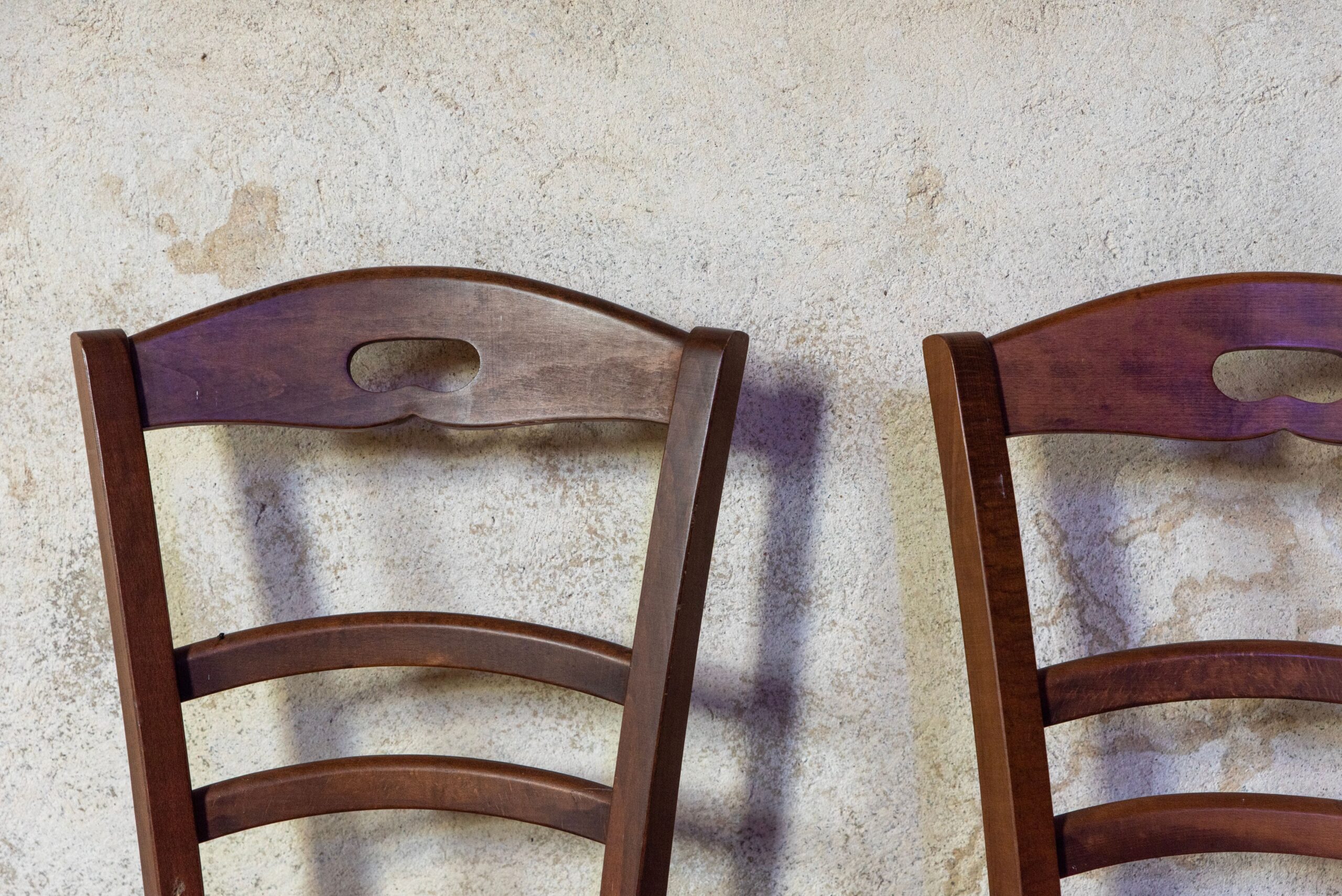
Nothing has broken.
The phone works. The chair is comfortable. The clothes still fit.
Then we see the newer version.
And something we were content with begins to feel inadequate.
What changed?
An object can become inadequate without anything happening to it. It still does what we need. But beside something newer, it begins to look like a life that has fallen behind.
Things matter. A comfortable home, clothes we enjoy and objects chosen with care can give pleasure and dignity to everyday life. Possessions also carry relationships: a cupboard inherited, a ring passed on, a chair someone repaired rather than discarded.
A Mediterranean home can hold these different kinds of value together. The old sits beside the new. Something is kept because it is useful, something because it is beautiful, something because of whose hands once held it.
But possessions can also become evidence that we are doing well. Then the question changes. We begin asking what our things say about us, and whether they say enough.
The problem is not simplicity. It is that having enough can begin to look like lacking ambition.
Simplicity need not mean bare rooms or owning as little as possible. An uncluttered home can be expensive; a crowded one can contain generations of care. Nor should anyone be asked to find virtue in being unable to afford what they need.
Perhaps simplicity begins with being able to enjoy something without continually measuring it against its replacement.
To keep what serves us. To care for what carries a history. To let something remain good enough even when something newer exists.
What would we still want if nobody else would ever see it?
Photo: Jan van der Wolf / Pexels