
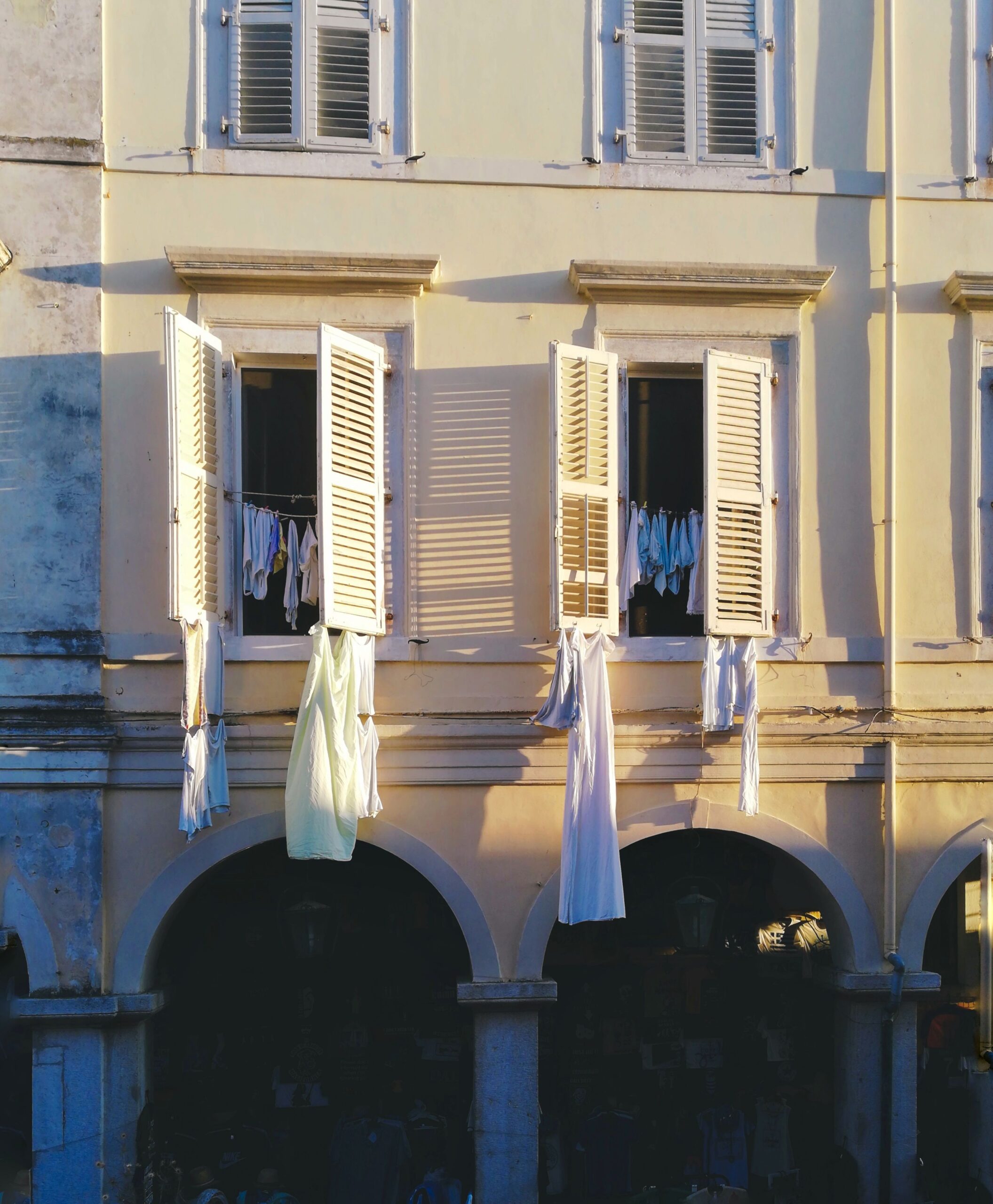
A narrow street.
Light on stone.
Washing between balconies.
We lift the phone.
Wait for someone to pass.
Move a little to hide the bins.
There.
Sometimes a photograph helps us notice what we have walked past for years. Light catches a doorway. A painted balcony stands out against stone. For a moment, the familiar becomes worth looking at again.
The problem is not beauty. It is the expectation that a place should remain as pleasing as the image we make of it.
A Mediterranean street can hold a great deal within one frame: homes, shops, washing, wires, plants, parked vehicles, people on their way somewhere. We choose an angle. Some things belong in our picture; others become distractions.
There is nothing wrong with composing a photograph. Every image leaves something out. But our choices become interesting when we return to everyday life. Do we begin to find the same things inconvenient there?
Washing can look picturesque from a distance. For someone living upstairs, it is a household task fitted around the weather. A narrow street can invite a leisurely walk and make carrying shopping home difficult. The same place holds different experiences.
Beauty does not require us to forget these things. Looking closely can deepen our pleasure by giving it a relationship with the life before us.
Nor must we cherish every broken pavement or neglected façade as “character.” People deserve homes and streets that are cared for. Their difficulties need not become someone else’s charming view.
Perhaps the photograph can be the beginning of our attention.
After admiring the street, we might grow curious about the lives that continue there when we have put the camera away.
Photo: Mirto Kon / Pexels